


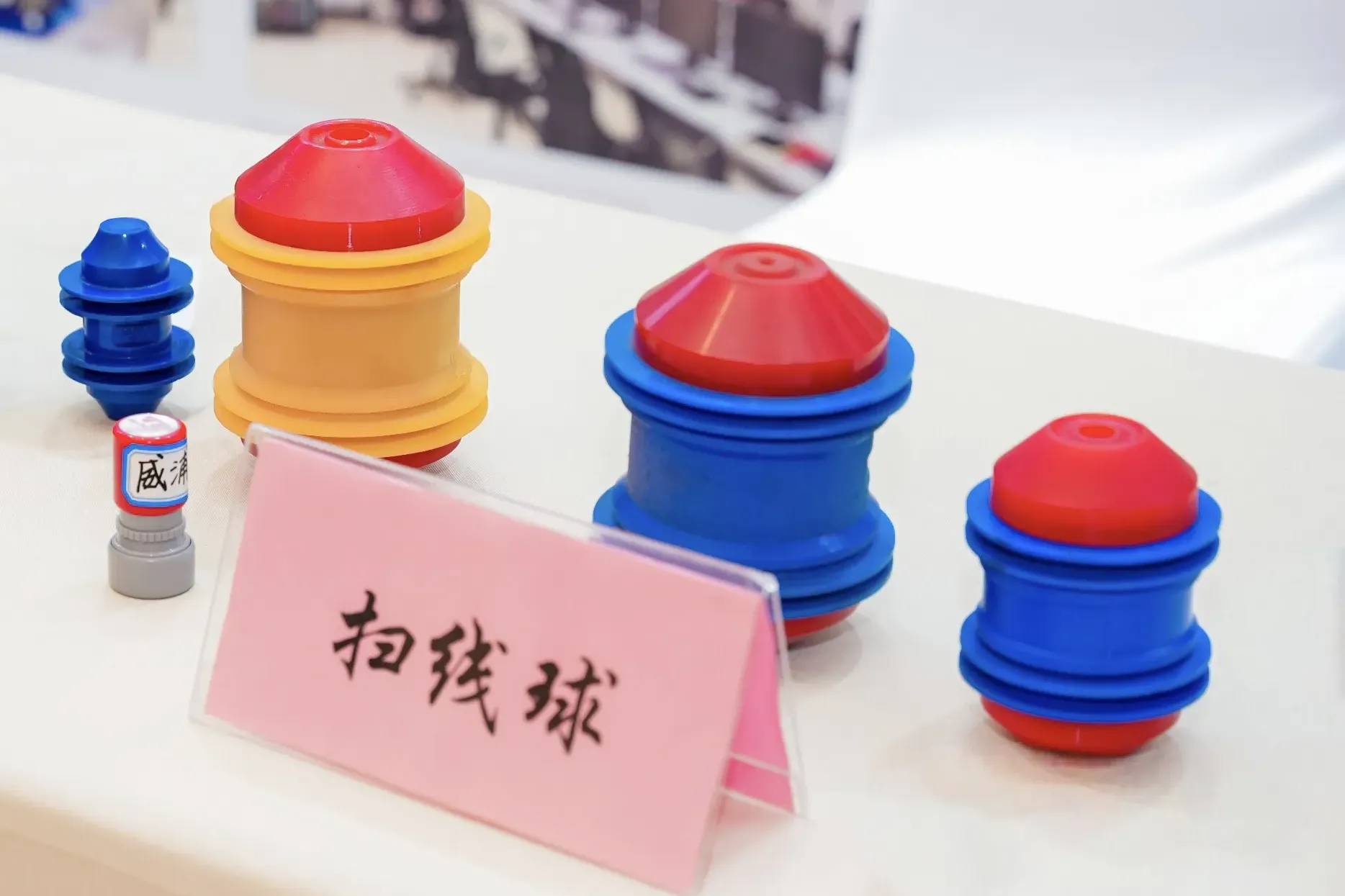
Pigging balls (pigs) are near-spherical pipeline cleaning devices made of elastic materials (e.g., specialty rubber, polyurethane) with a diameter slightly larger than the pipeline’s inner diameter (2%~10% interference fit) to ensure tight wall contact. Driven by pipeline media (gas or liquid), they travel through pipelines to perform cleaning, product recovery, and other functions.
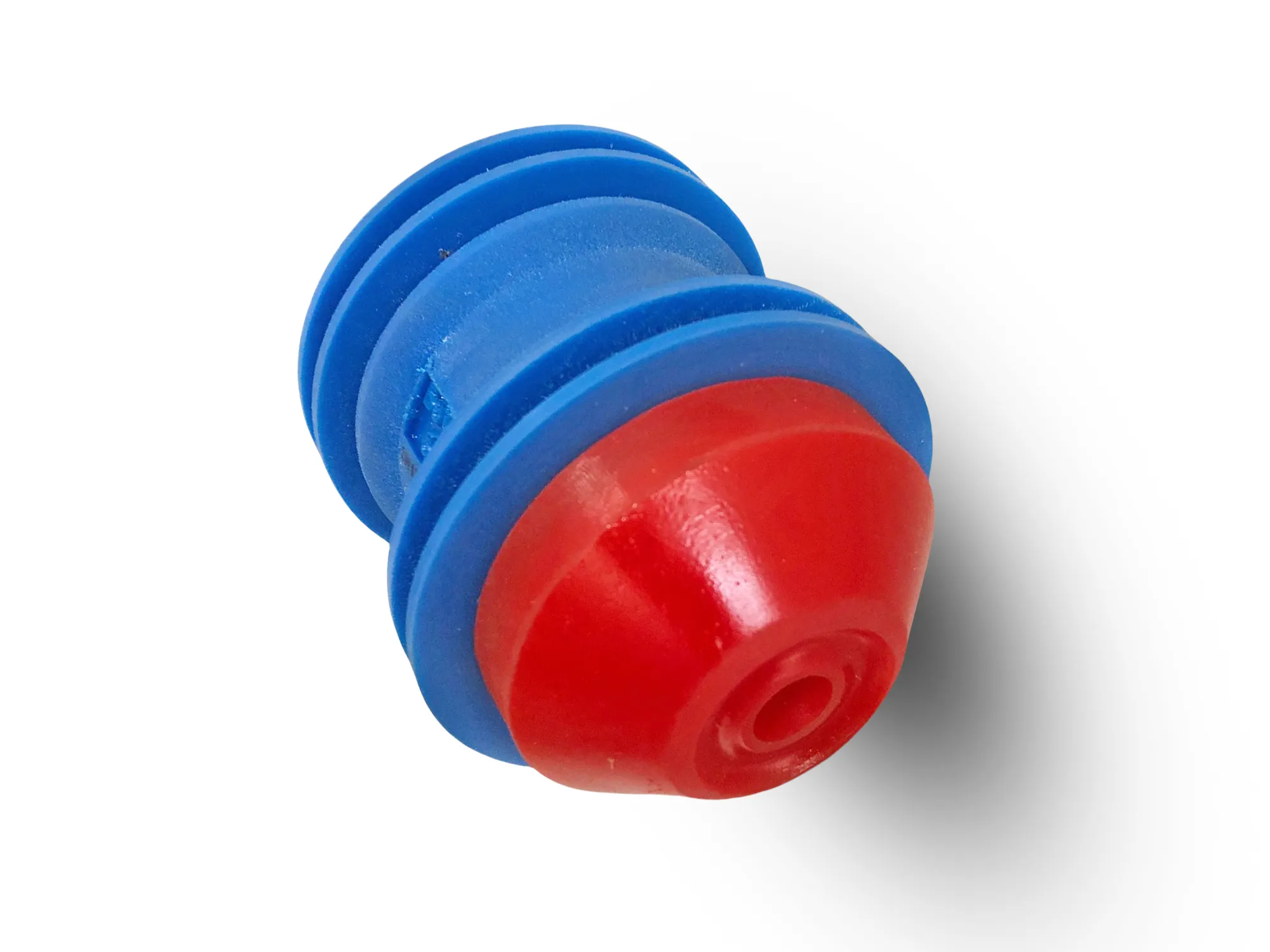
1. Material Selection
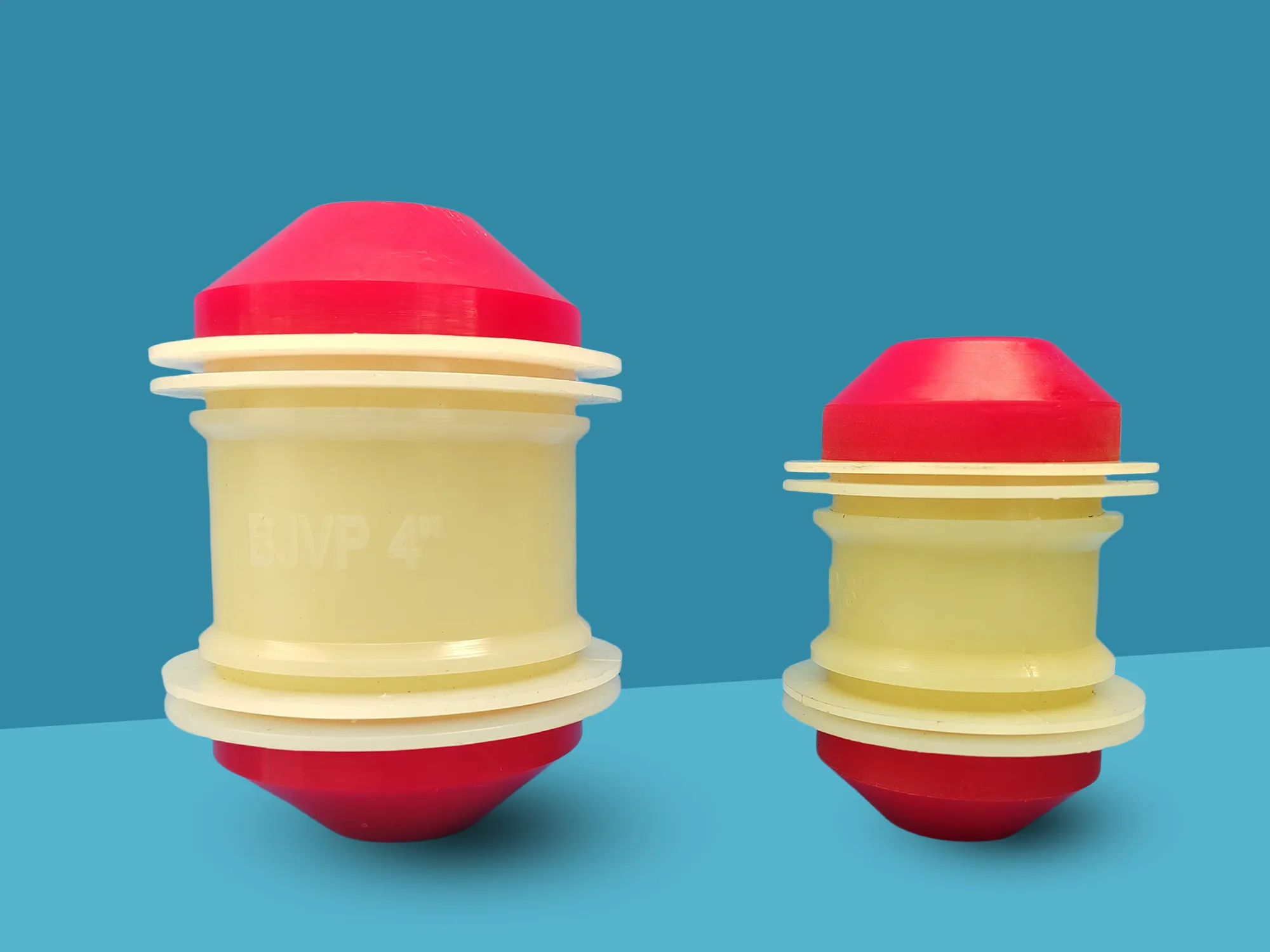
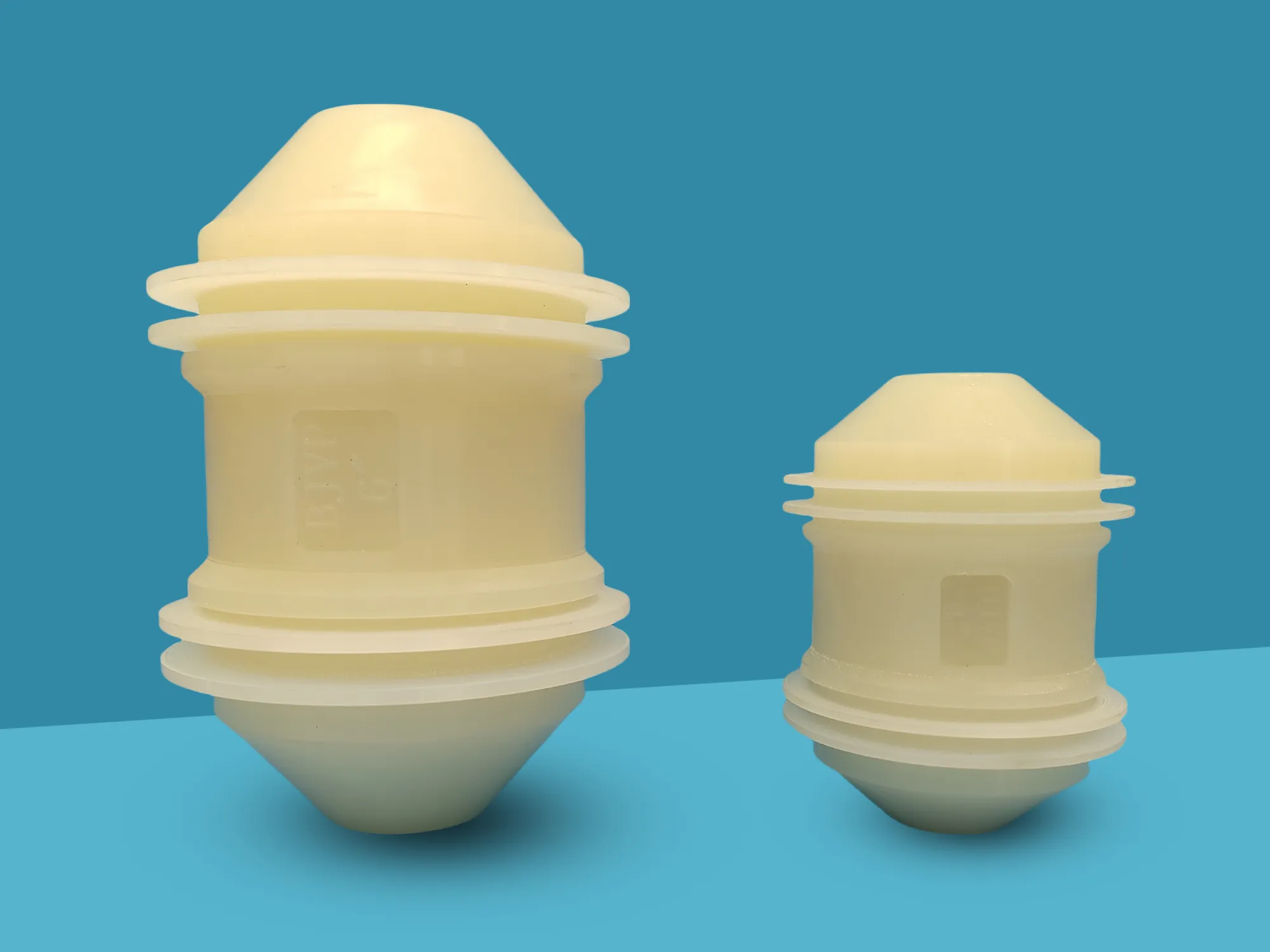
Pigging balls are typically made of rubber or polyurethane, with common shapes including cylindrical and disc designs for varying operational needs. Different materials exhibit distinct properties:
- Modified polyurethane balances flexibility and wear resistance, ideal for long-term operations.
- Fluorocarbon rubber (FFKM) offers superior corrosion resistance while maintaining wear resistance but at a higher cost.
- EPDM rubber provides cost efficiency with slightly lower wear resistance.
Selection criteria:
- For highly corrosive media: Fluorocarbon rubber pigs.
- For low-corrosion, cost-sensitive applications: EPDM rubber pigs.
VP Company’s advanced polyurethane technology delivers multi-material pigs for diverse conditions:
| Material | Properties | Applications |
|---|---|---|
| Polyurethane (PU) | High elasticity, wear/tear resistant | Oil/gas, chemical pipelines |
| Fluorocarbon (FFKM) | High-temp (≤200°C), chemical-proof | Strong acid/alkali pipelines |
| Silicone rubber | Food-grade, cryogenic (-60°C) | Food/pharmaceutical pipelines |
Surface treatment technology: The outer wall of the sphere is treated with special textures or coatings, which can efficiently scrape off residues on the pipe wall.
2. Drive System
- Drive media: Compressed air/nitrogen (prevents oxidation).
- Pressure control: Dynamically adjusted (0.1-10 MPa) based on pipeline length/media viscosity.
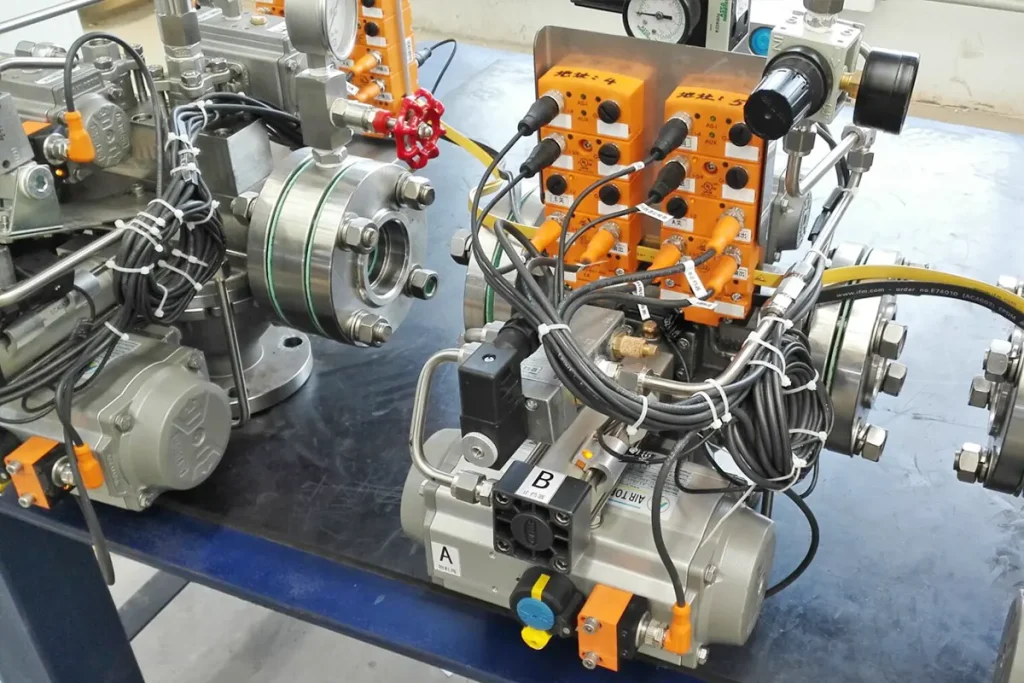
- Real-time tracking: Sensors monitor pig position/speed for closed-loop control.
- Automation: PLC-integrated operation minimizes manual input.
3. Structural Design
| Type | Design | Advantage |
|---|---|---|
| Industrial pigs | Modular, detachable | Easy maintenance |
| Sanitary pigs | Seamless, one-piece | Zero contamination risk |
4. Selection Principles
- Media compatibility: Fluorocarbon for corrosive media; silicone for food-grade pipelines.
- Temperature: Use high-temp specialty rubber above 120°C.
5. Key Industry Applications
| Industry | Recommend | Drive Media |
|---|---|---|
| Oil & gas | Modified polyurethane | Nitrogen (explosion-proof) |
| Pharmaceuticals | Fluorocarbon/FFKM | Compressed air |
| Food & beverage | Seamless silicone pigs | Sterile compressed air |
6. Technology Trends
- Eco-materials: Biodegradable polyurethane in development.
- Digital twins: Predictive path/wear modeling using pipeline data.
VP’s innovation: Proprietary modified polyurethane formulations outperform standard PU in heat resistance.
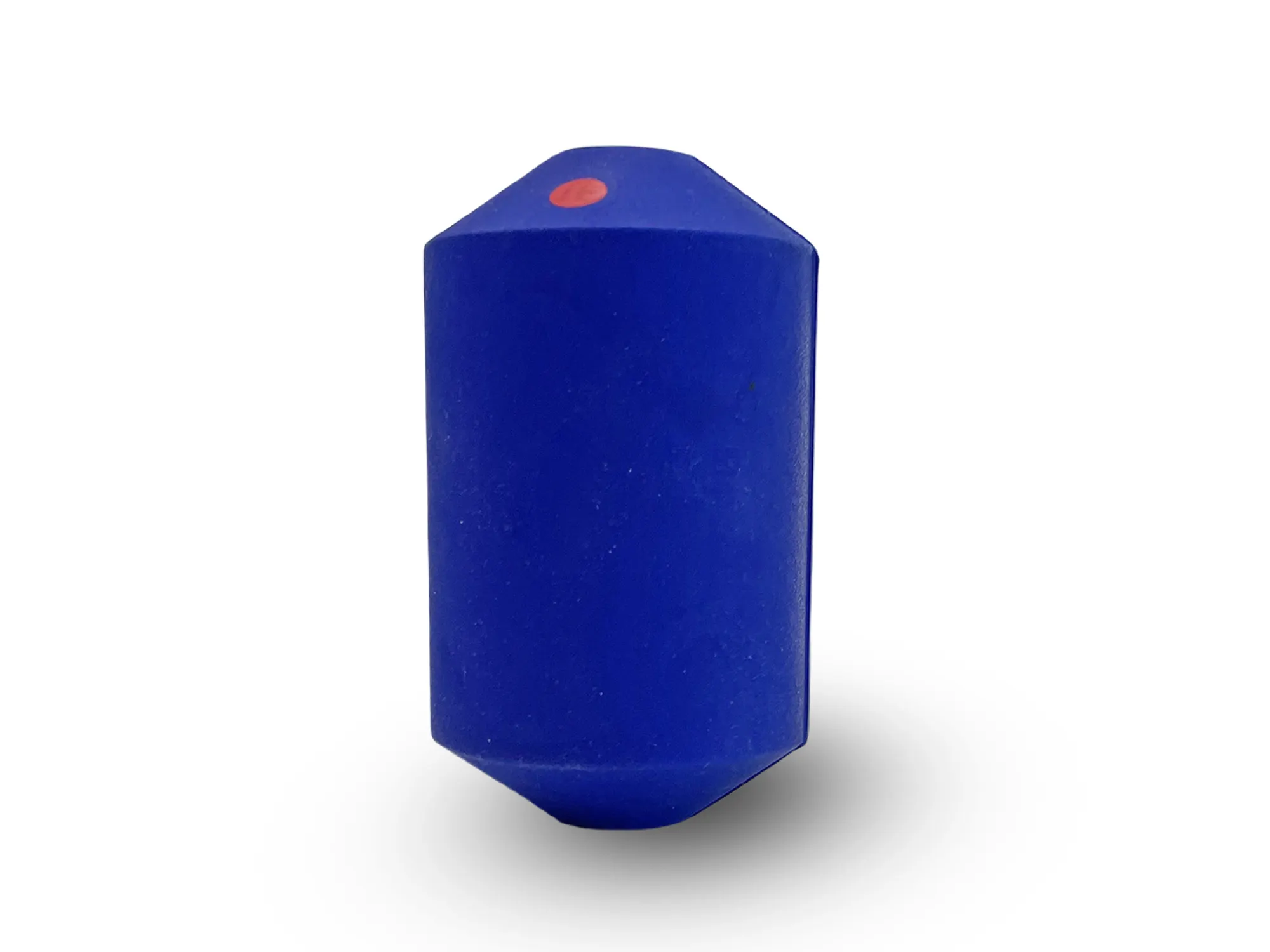
Optimal pigging performance relies on synergy between material science, structural design, and smart control. VP offers customized solutions for pipeline self-cleaning and autonomous operation.
JingSheng Gou
General Manager | Senior Technical Expert | Industrial Automation Specialist. Nach meinem Abschluss an der USTB war ich als Führungskraft und technischer Experte bei Beijing Shougang Electronics tätig, bevor ich 1996 Geschäftsführer von BJVP Machinery wurde. Mein Fachwissen erstreckt sich auf die industrielle Automatisierung und kundenspezifische Lösungen, einschließlich automatisierter Schmierstoffsysteme, Pipeline-Molchung, Prozesssteuerung, Präzisionswägung und Pumpenautomatisierung.
Artikel zum Thema
-
What Are the Core Components of a Pigging System?
A pigging system efficiently recovers product residue and cleans pipelines through the coordinated op...
-
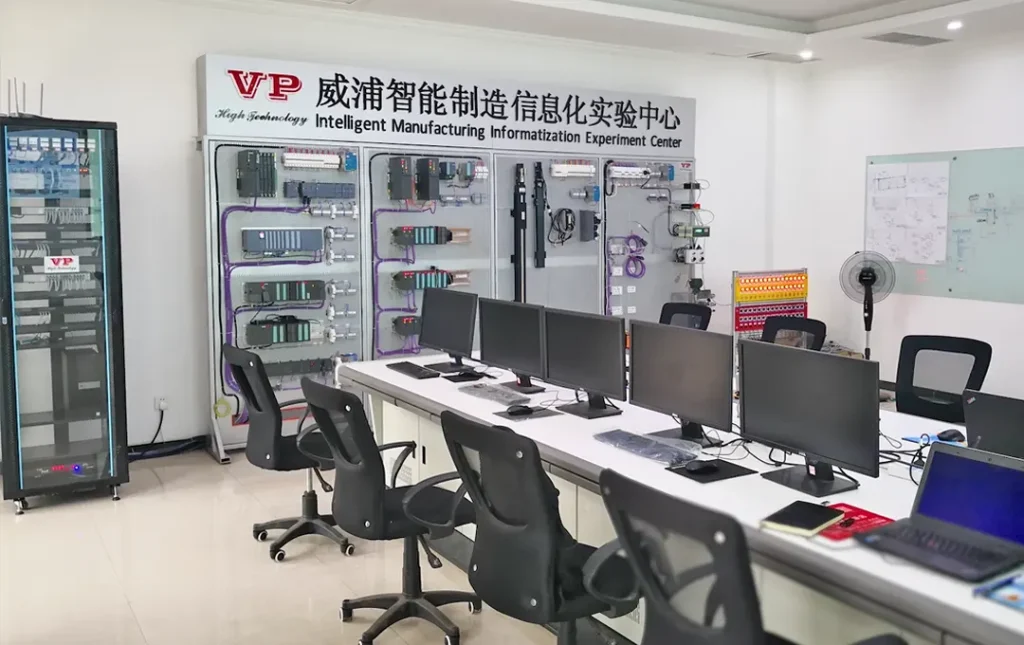
Verteiltes Kontrollsystem für Molche: Pipeline-Sicherheit und -Effizienz
Im Molchsystem muss die Anlage mit einem Steuerungssystem ausgestattet sein (das auch bedient werden kann)...
-
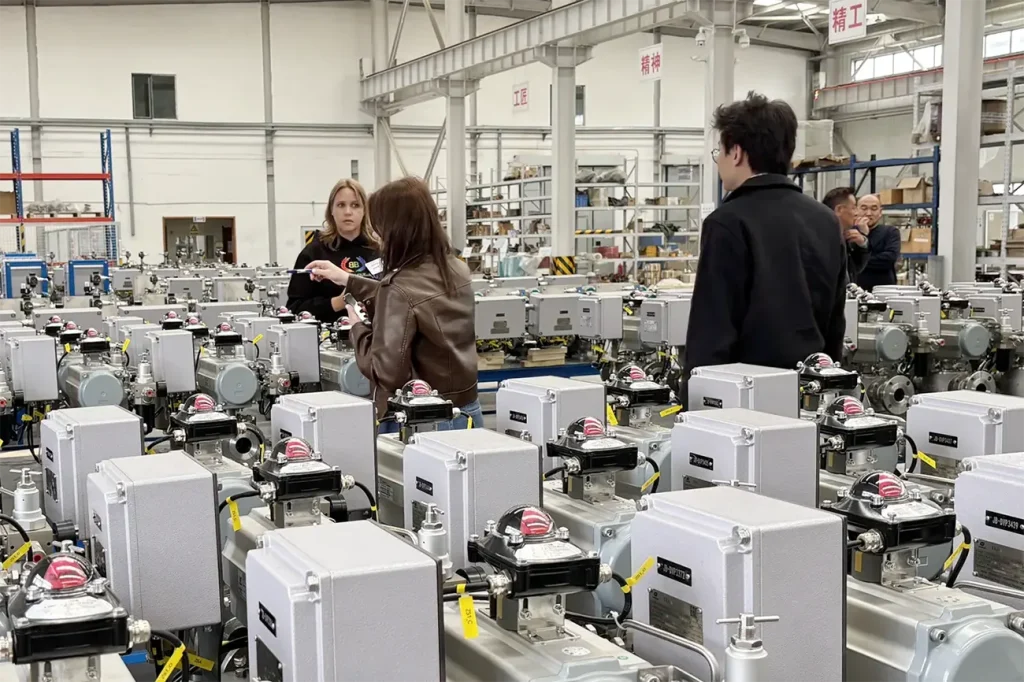
Types of Pig Stations in Pigging Systems
Pig stations are essential components of pigging systems, enabling automated launching and receiving ...
Mehr lesen
Molchen
System
Lösungen
Wir sind eine Fertigungslösung,
mit mehr als 30 Jahren
der Erfahrung in
Lösungen für die Molchung von Pipelines.